Last Updated: November 2, 2026
Quick Summary
The best AI tools for creating brand assets in 2026 store your brand rules once and enforce them everywhere, so every logo, ad, and video comes out on brand. They handle production while your judgment decides the offer, the hook, and what is worth producing.
- AI creative automation tools generate marketing assets from stored brand rules so every file matches.
- Brand-management platforms increasingly sell control and automation to larger teams, per Marq's 2026 review.
- AI handles sizing, resizing, and versioning, but human judgment still wins on the offer and hook.
- A Design Research Society study frames generative AI in brand identity as a workflow and role shift.
- The pattern across every tool worth using: brand rules stored once, enforced everywhere.
Table of Contents
- What the Best AI Tools for Creating Brand Assets Get Right in 2026
- AI Creative Automation Tools That Keep Every Asset on Brand
- AI Ad Creative Tools and AI Video Creation Tools for Marketing
- The Verdict
- Frequently Asked Questions
What the Best AI Tools for Creating Brand Assets Get Right in 2026
The best AI tools for creating brand assets in 2026 treat consistency as the product, not the afterthought. SVG Genie's seven-tool brand identity test compared full identity builds rather than logo-only output, which tells you where buyer expectations have landed. Brand assets are the logos, color systems, type rules, templates, and ad creative that make a business recognizable across every channel. At ClickSling, we build from the premise that data alone does not produce advertising that works; judgment does.
Want to see what an AI creative team working from brand standards looks like? Meet your new creative department. For quick answers, see the ClickSling FAQ.
AI Creative Automation Tools That Keep Every Asset on Brand
AI creative automation tools generate marketing assets from stored brand rules so every file comes out matching. The value is not speed alone: a local manager can produce something without breaking the corporate system.
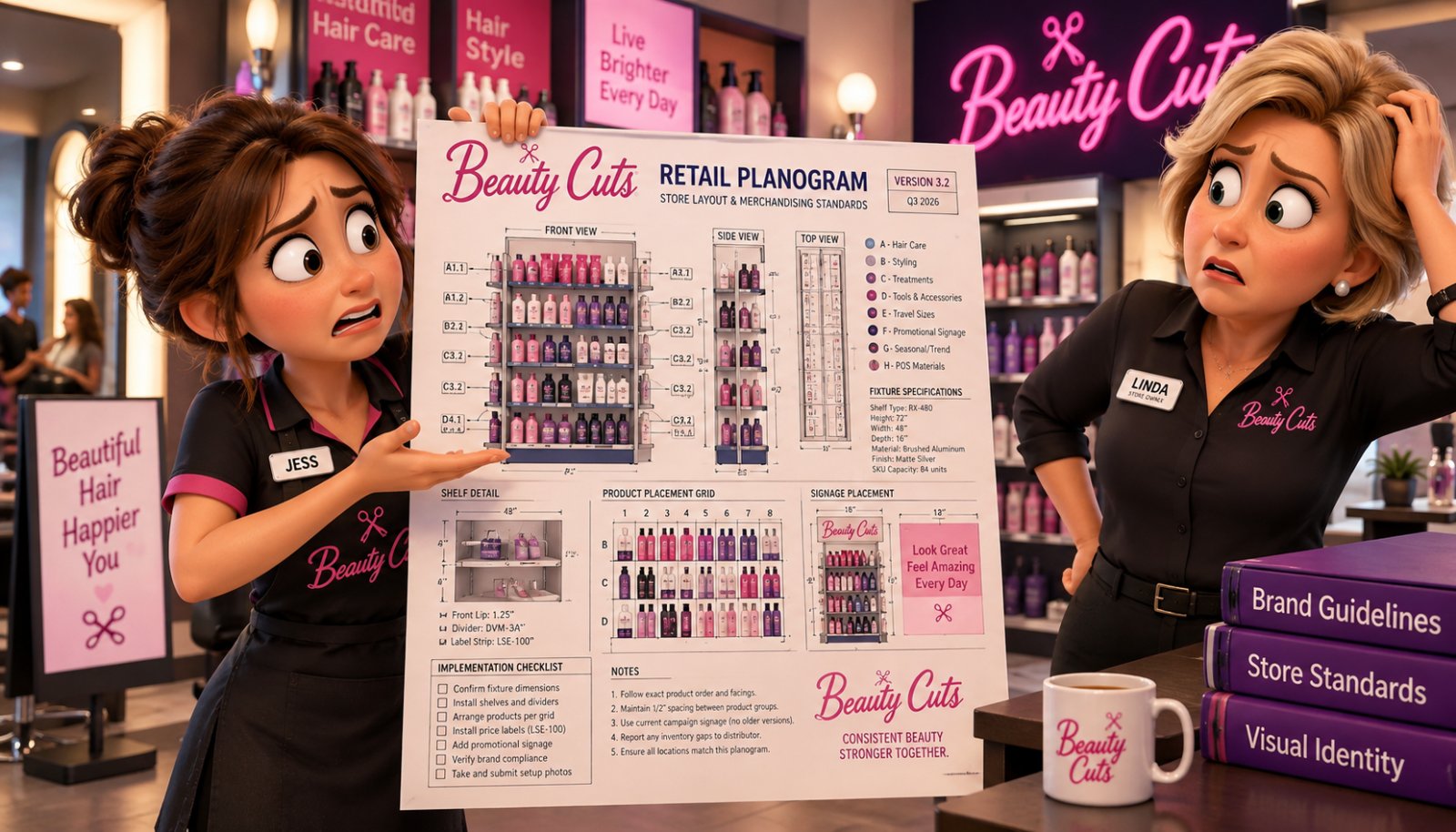
What most guides miss is that brand-management platforms increasingly sell control and automation to larger teams, with locked templates and role-based permissions, per Marq's 2026 brand management review. That is the right feature set. The question is whether a five-person business can use it without a training week. If producing on-brand work without a designer is the goal, this walkthrough on creating professional ads without a designer shows the practical sequence.
Maintaining this visual consistency extends beyond static graphics to the dynamic requirements of live event coverage, where AI photo editing ensures that every captured moment aligns perfectly with your established brand identity.
AI Ad Creative Tools and AI Video Creation Tools for Marketing
AI ad creative tools produce campaign-ready advertising, while AI video creation tools for marketing handle concepts, scenes, voiceover, and music. Both categories are converging, because a brand kit that stops at static images is only half a kit in 2026.
Asset Type | What AI Handles Well | Where Human Judgment Still Wins |
|---|---|---|
Logos and marks | Fast variations on a brief | Distinctiveness that survives a crowded feed |
Social and display ads | Sizing, resizing, versioning | The offer and the hook |
Short video | Scenes, voiceover, music beds | Pacing and the first three seconds |
Brand guidelines | Enforcing stored rules | Deciding what the rules should be |
A Design Research Society study on generative AI in brand identity frames the shift as a change in workflows and professional roles, not simple automation of asset production. That matches what we see: the tool handles production, the strategist decides what is worth producing. Video is where this shows up fastest, and you can see how a produced commercial comes together in video commercials for social media. When you are ready to compare plans, rent or own ClickSling lays out the options.
The Verdict
The pattern across every tool worth using is the same: brand rules stored once, enforced everywhere, edited by people who are not designers. That gap is the whole decision.
Frequently Asked Questions
Can AI create a complete set of brand assets?
Yes. Modern platforms can produce logos, brand kits, business cards, social posts, and video from a single brand brief. The catch is consistency: a complete set only works when every asset pulls from the same brand inputs, so look for tools that store your colors, fonts, and tone in one place rather than generating each file in isolation.
What should I look for in an AI brand asset tool?
Prioritize four things: a central library that holds your brand rules, editing and reuse of generated files, output across images, ads, and video, and controls that stop off-brand edits. For a small team, also check whether the tool requires design skills to operate and whether it charges per user, since both affect the real cost of running it across locations.
How can I keep AI-created marketing materials consistent?
Set your brand inputs once, then generate from that source instead of starting each asset from scratch. Tools with built-in brand asset management let you lock logos, colors, and approved templates so anyone producing content works from the same base. Review a sample batch before scaling, and keep one person accountable for approving new templates.
Most small teams do not fail at marketing because they lack tools. They fail because the tools produce volume without direction. ClickSling was built by advertising veterans with more than 40 years of experience, and the platform puts an AI creative team to work from your brand standards, with built-in brand asset management, corporate brand control across locations, and no per-user or training fees. Get started with ClickSling and put a creative department behind every campaign.
